
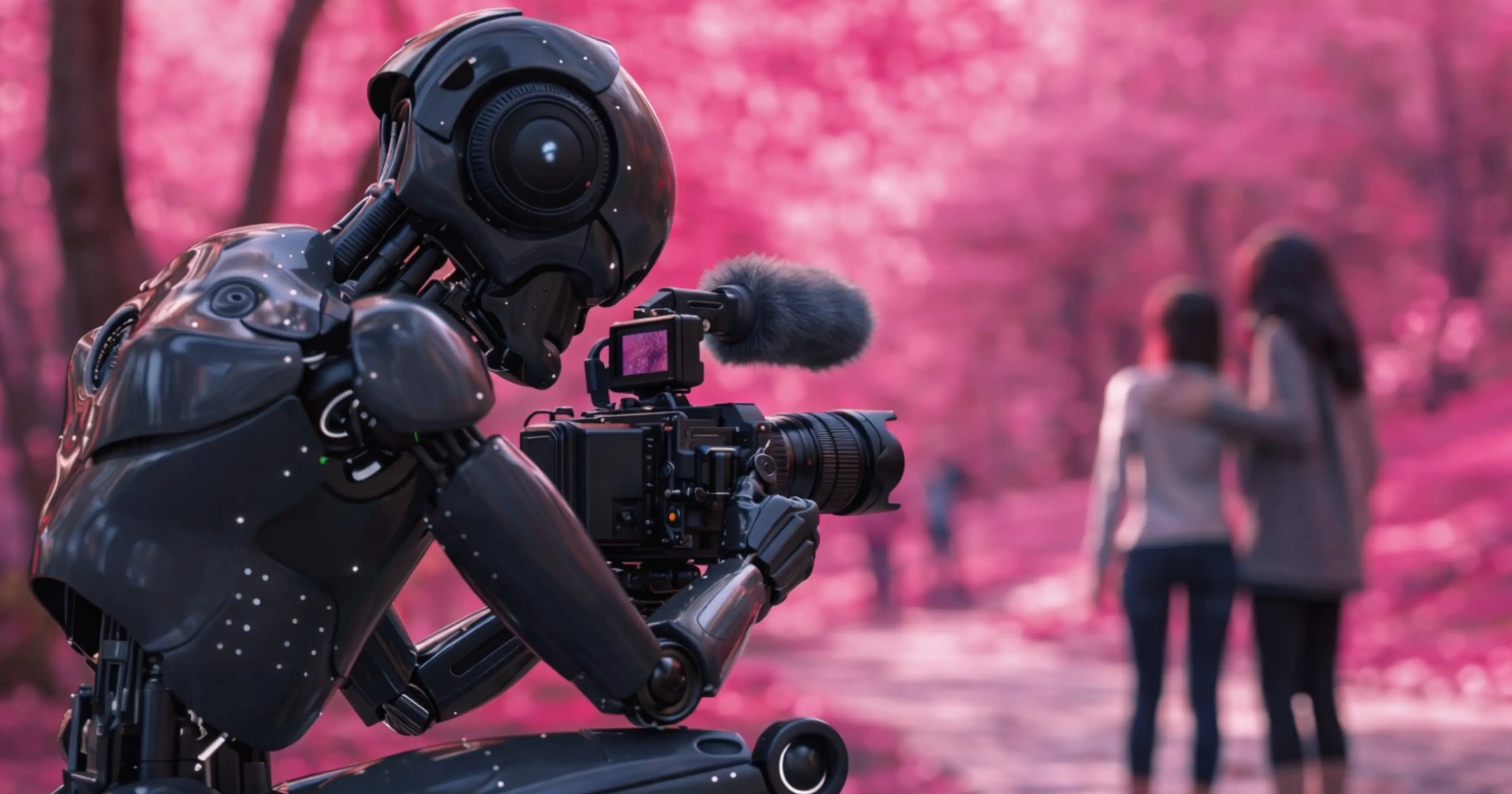
What is AI Filmmaking? A Complete Guide for Creators in 2026

AI filmmaking is the practice of creating video content using artificial intelligence tools to generate, direct, and produce footage without traditional production equipment. Instead of cameras, lighting rigs, and crews, AI filmmakers use generative models that produce video from text descriptions, reference images, or recorded performances. The result can range from short social clips to multi-scene narrative films, produced by a single person in hours rather than days.
The practice emerged as text-to-video models became capable enough for creative use around 2023 and matured rapidly through 2024 and 2025. By 2026, AI filmmaking has moved from experimental to practical: tools exist for every stage of production, output quality is genuinely cinematic, and the workflows have simplified enough that filmmakers without technical backgrounds can produce professional-looking results.
How AI Filmmaking Works
AI filmmaking replaces the traditional production pipeline with generative tools at each stage. The creative process remains the same: you have a story, characters, and visual ideas. The difference is in how those ideas get turned into footage.
| Production stage | Traditional approach | AI approach |
|---|---|---|
| Script | Writer | ChatGPT, Claude, or your own writing |
| Storyboard | Storyboard artist | LTX Studio, Boords, Midjourney |
| Casting and characters | Actors, casting director | Motion, Runway Character Reference, Midjourney |
| Filming | Camera crew, locations, lighting | Motion, Runway, Kling, Google Veo |
| Voiceover and music | Voice actors, composers | ElevenLabs, Suno, Udio |
| Editing | Editor, colour grader | DaVinci Resolve, CapCut, Premiere |
The Main Challenges in AI Filmmaking
AI filmmaking has become genuinely capable, but two challenges remain significant:
Character consistency
Most AI video models generate each scene independently with no memory of previous outputs. This means the same character can look noticeably different from one scene to the next, a problem called identity drift. Solving it requires either careful manual reference management or a purpose-built tool like Motion that handles consistency automatically at the project level.
Prompt precision
Getting the result you want from an AI video model requires learning how to describe scenes precisely. Camera angle, lighting, character action, mood, and visual style all need to be communicated in your prompt. This has a learning curve, though tools like Motion reduce the prompt burden by handling consistency and world-building separately from the generation prompt itself.
What AI Filmmaking Can and Cannot Do
| AI filmmaking can | AI filmmaking cannot (yet) |
|---|---|
| Generate cinematic footage from a text description | Guarantee perfect character consistency without the right tool |
| Produce multi-scene films with consistent characters | Reliably generate complex multi-character interactions in one shot |
| Create original music and voiceover | Replace the creative judgment of a director |
| Produce complete short films on a near-zero budget | Match the visual control of high-end traditional production |
| Allow one person to do the work of a full production team | Deliver broadcast-quality resolution in all tools |
Who is AI Filmmaking For?
- Independent filmmakers who want to tell stories without a production budget
- Brand creators producing campaign videos, product films, and brand stories
- Content creators building a regular video output without a filming setup
- Directors using AI for previz, pitch decks, or rapid prototyping of scenes
- Animators and visual storytellers exploring AI as a new creative medium
Where to Start
The fastest way to start is to pick one tool and make something simple. A 30-second scene with one character and one location is enough to understand how AI filmmaking works in practice.
For multi-scene projects where character consistency matters, Motion is the most accessible starting point. Define your character, write a scene description, and generate. The consistency is handled automatically so you can focus on the story rather than the tooling.
Frequently Asked Questions
What is AI filmmaking?
AI filmmaking is the creation of video content using artificial intelligence tools to generate footage, characters, and audio without traditional production equipment. It covers the full pipeline from script to final cut, with AI tools replacing or augmenting each stage of the production process.
Can you make a real film with AI?
Yes. AI-generated short films are being produced and screened at festivals in 2026. The tools have reached a quality level where the output is genuinely cinematic for short-form content. Longer narrative films are more challenging but achievable with the right workflow and tools.
What tools do AI filmmakers use?
Common tools include Motion or LTX Studio for multi-scene production and consistency, Runway or Kling for high-quality clip generation, ElevenLabs for voiceover, Suno for music, and DaVinci Resolve or CapCut for editing. Most AI filmmakers use a combination of 3 to 5 tools covering different parts of the pipeline.
How long does it take to make an AI film?
A 60 to 90-second short film with consistent characters can be produced in 3 to 5 hours for a first-time AI filmmaker. With practice and the right tools, the same project takes 90 minutes to 2 hours. Longer films take proportionally more time, primarily in the scene generation and editing stages.
Is AI filmmaking replacing traditional filmmaking?
Not replacing, but expanding access. AI filmmaking makes it possible for creators without production budgets or crews to tell cinematic stories. Professional filmmakers are also adopting AI tools for previz, pitch decks, and rapid prototyping. The creative decisions, story judgment, and directorial vision remain human. AI handles the execution.